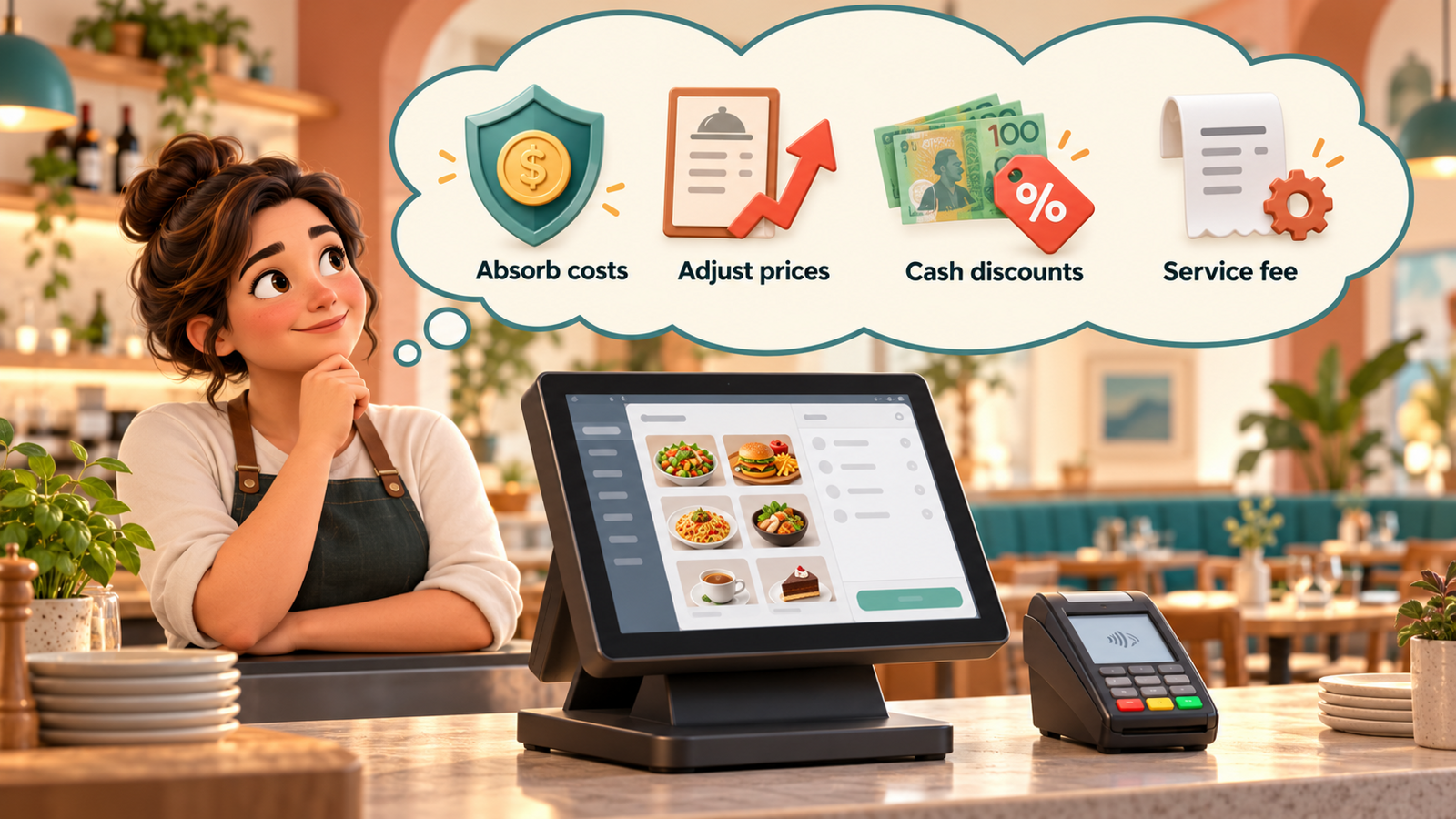
Australia’s card surcharging changes, effective from 1 October 2026, mean hospitality venues need to rethink how they cover payment processing costs. For cafés, restaurants, pubs and bars, those costs remain a business expense even when they can no longer be added to a customer’s card payment. One option is to absorb the expense to maintain existing menu prices and customer goodwill. Another is to recover some or all of it through a considered price review, either across the menu or through selected items. A blended approach can also work: absorb part of the cost and make modest adjustments where margins allow. Start with your actual merchant fees and the proportion of sales paid by card, rather than automatically increasing every price by your former surcharge percentage.
What about introducing a service fee, administration fee or venue fee? A fee that applies regardless of whether customers pay by cash or card is outside the card surcharge ban, but its name alone does not make it acceptable. A compulsory service fee generally needs to be included in the displayed total price; simply adding a percentage at checkout or mentioning it in small print is not enough. Weekend and public holiday surcharges remain available, subject to the hospitality menu disclosure rules. Genuine booking, delivery, corkage or other service charges may also be appropriate where those services are provided, with clear pricing and any mandatory charges included as required. However, renaming a card-only surcharge a “service fee” does not avoid the ban, and extra charges should always be weighed against customer expectations.
Venues can also encourage cheaper payment methods by offering a discount for cash or PayID, provided the advertised price is the full price customers pay without that discount. Bank transfers may be practical for functions, catering and larger bookings. Businesses can review which payment methods they accept, including whether to stop accepting particularly expensive options, but restrictions must be communicated before customers order and may discourage sales. Cash also carries costs, including counting, banking, security and staff time. Before changing your payment policy, ask your provider about better merchant rates, suitable pricing plans, terminal rental costs and least-cost routing for eligible debit transactions. Reducing the underlying expense may be more effective than introducing another customer charge.
Finally, recovering the cost does not have to happen entirely through payment policies or higher prices. Reducing food waste, improving purchasing, tightening portion control, matching staffing to demand and promoting stronger-margin products can help protect profitability. Reviewing discounts, meal deals and delivery-platform costs may reveal further savings, while well-designed extras and bundles can increase the average spend. The right response will differ between venues, but it should begin with accurate sales and cost information. At BOSSII, we encourage hospitality operators to use their POS reporting to understand their margins and make informed pricing decisions—so any changes support both a profitable business and a positive customer experience.
Should you choose to initiate a service fee, BOSSII offers the opportunity to add a line to the bottom of every bill as a percentage or fixed cost on every transaction. Contact the team on support@bossii.com for more information
